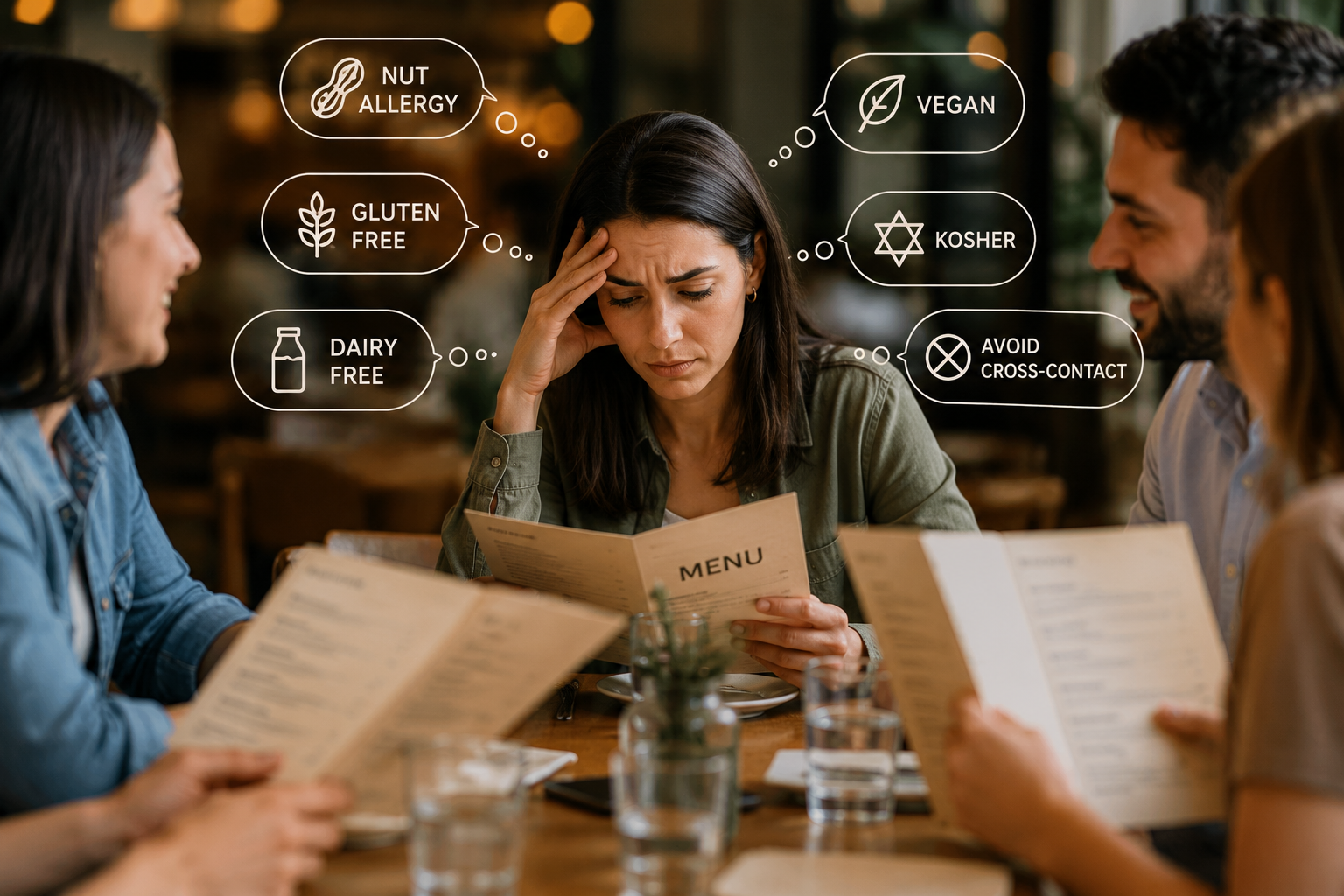
Most people have seen it before: a menu with gluten-free labels, allergy-friendly symbols, or notes about dietary accommodations.
At first glance, that information feels reassuring.
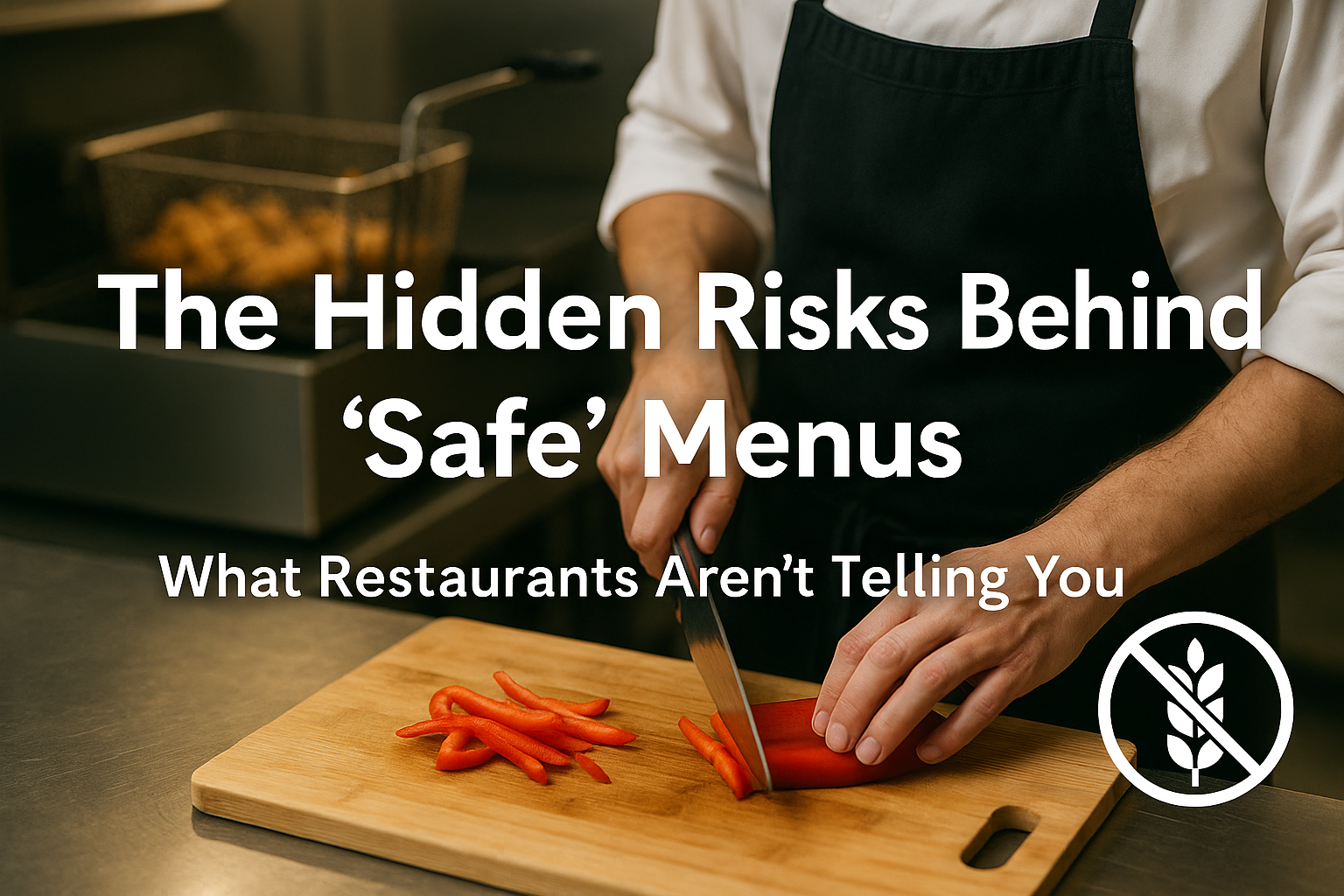
But menu labels don’t always explain how food is actually prepared behind the scenes.
And for people with food allergies, celiac disease, or severe dietary restrictions, that difference matters.
A dish can look safe on the menu and still carry risk in the kitchen.
What Is Cross-Contact in Restaurants?
Cross-contact happens when trace amounts of allergens end up in food that was supposed to be allergen-free.
It can happen through:
- shared cutting boards
- reused frying oil
- shared grills or flat tops
- preparation surfaces
- kitchen utensils
- sauces, dressings, or marinades
- toppings or garnishes handled near allergens
- accidental ingredient transfer during cooking
Unlike bacteria, allergens cannot be “cooked away.” Heat does not remove the risk.
The level of risk can vary by allergy, sensitivity, and personal medical guidance, but the preparation details still matter.
For many diners, the concern is not only whether an allergen appears as an ingredient.
It is everything happening around the food before it reaches the table.
Why Menu Labels Aren’t Always Enough
Menu labels can be helpful, but they don’t always explain what is happening inside the kitchen.
A dish may be labeled gluten-free, dairy-free, nut-free, or allergy-friendly, but that label may only describe ingredients, not preparation.
It may not explain whether the dish is prepared on shared surfaces.
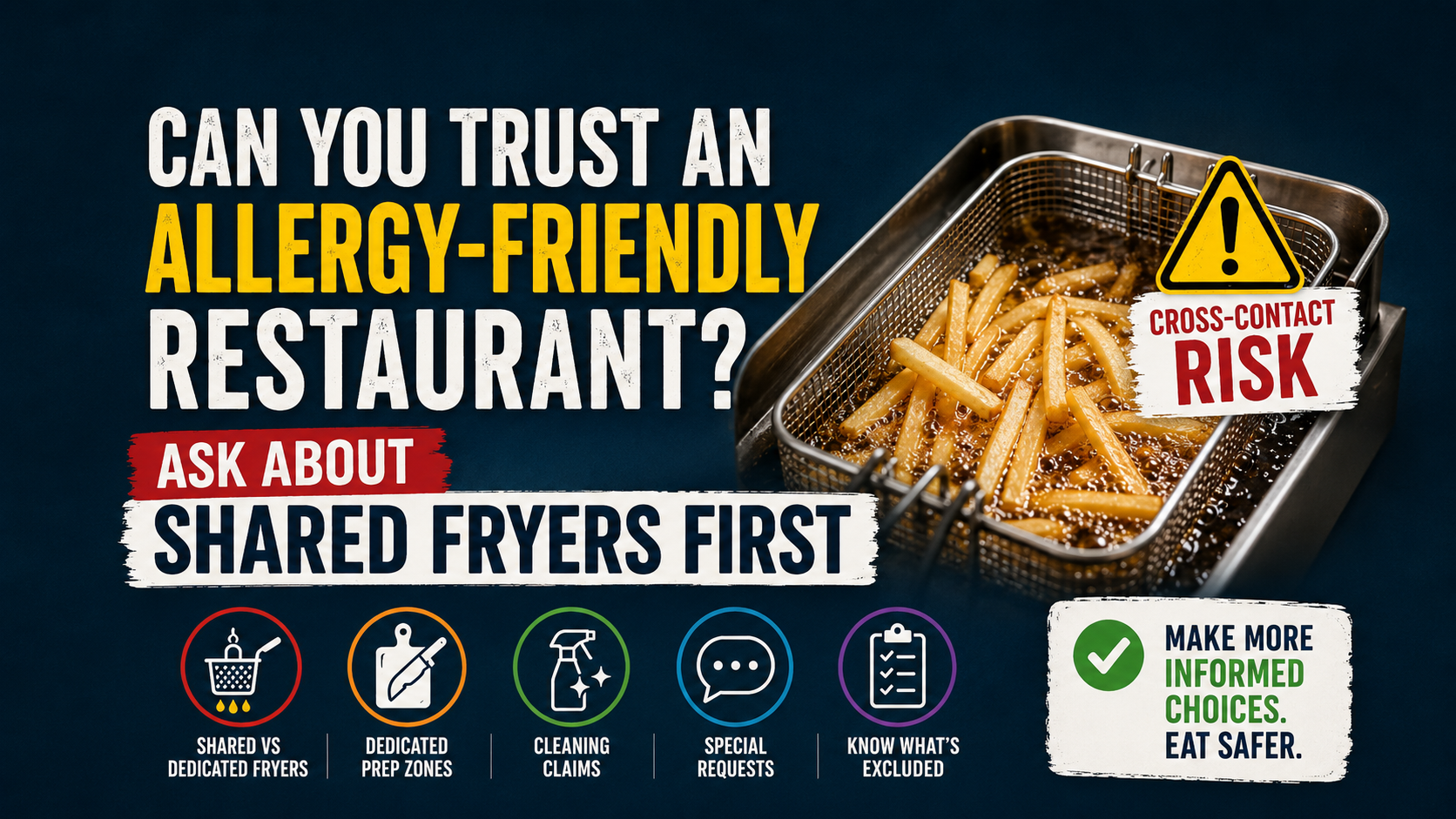
It may not explain whether the fryer is shared.
It may not explain whether utensils are changed.
It may not explain whether the kitchen has a consistent process for allergy orders.
And in busy restaurant environments, small mistakes can happen easily.
Ingredient substitutions.
Shared equipment.
Miscommunication between staff.
Inconsistent kitchen procedures.
Most restaurants genuinely want to accommodate customers safely.
But good intentions do not always eliminate uncertainty.
Why Kitchen Practices Matter More Than Labels
A gluten-free label does not automatically mean a dish is safe for someone with celiac disease.
A nut-free item does not automatically mean there is no nut cross-contact risk.
A dairy-free option does not automatically mean separate utensils or surfaces were used.
Preparation methods matter too.
A dedicated fryer is different from a shared fryer.
A separate prep area is different from a cleaned shared counter.
A clearly flagged allergy order is different from a casual note to the server.
Separate utensils matter.
Separate preparation surfaces matter.
Clear kitchen procedures matter.
For diners with allergies or severe restrictions, those details can completely change whether a meal feels safe to eat.
And unfortunately, that information often is not visible on the menu itself.
Red Flags on an Allergy-Friendly Menu
Not every vague menu label is dangerous, but some signs should make diners ask more questions.
Common red flags include:
- “gluten-friendly” instead of “gluten-free”
- no mention of shared fryers
- no explanation of cross-contact risk
- vague language like “ask your server”
- allergen information only available in a hard-to-read PDF
- no ingredient detail for sauces, dressings, marinades, or toppings
- staff who cannot explain how allergy orders are handled
- different answers from different employees
These signs do not always mean a restaurant is unsafe.
But they do mean the menu alone may not provide enough information.
Questions to Ask Before Trusting an Allergy-Friendly Menu
When the menu does not explain preparation clearly, diners may need to ask more specific questions.
Useful questions include:
- Is the fryer shared with foods that contain my allergen?
- Are separate utensils used for allergy orders?
- Are prep surfaces cleaned or separated before preparing allergy-sensitive meals?
- Is the allergy noted clearly for the kitchen?
- Are sauces, dressings, marinades, or toppings checked separately?
- Can ingredients change without being updated on the menu?
- Is there a manager or chef who handles allergy questions?
The goal is not to make dining stressful.
The goal is to get beyond vague labels and understand what actually happens in the kitchen.
Why More Diners Are Asking Questions About Food Safety
More people are paying closer attention to ingredients, kitchen practices, and cross-contact risks before deciding where to eat.
Not because they want dining out to feel complicated.
Because uncertainty changes how people order, where they eat, and what they feel comfortable trusting.
For many people, eating out already involves careful research:
- checking menus
- reading reviews
- calling restaurants
- asking staff questions
- double-checking ingredients
- looking for reports from other diners
We explored that challenge further in Why Finding Restaurants for Multiple Dietary Restrictions Is So Difficult.
Why Better Food Transparency Matters
For many diners, the hardest part is not avoiding certain foods.
It is figuring out whether the information they are seeing is actually reliable.
Ingredient changes, shared equipment, staff turnover, and inconsistent kitchen practices can all create uncertainty that never appears on the menu itself.
That is why food transparency needs to go beyond labels.
Diners need clearer information about ingredients, preparation, cross-contact, and how restaurants handle allergy-sensitive orders.
At Simpa, we believe people should have easier access to clear food information before they order.
Because no one should have to rely only on guesswork when it comes to food safety.
Final Thought
Dining out should feel enjoyable, social, and comfortable.
Not stressful.
Clearer information, better kitchen transparency, and more consistent food safety practices can make a meaningful difference for people managing allergies and dietary restrictions every day.
Because everyone deserves to feel more confident sitting down at the table.